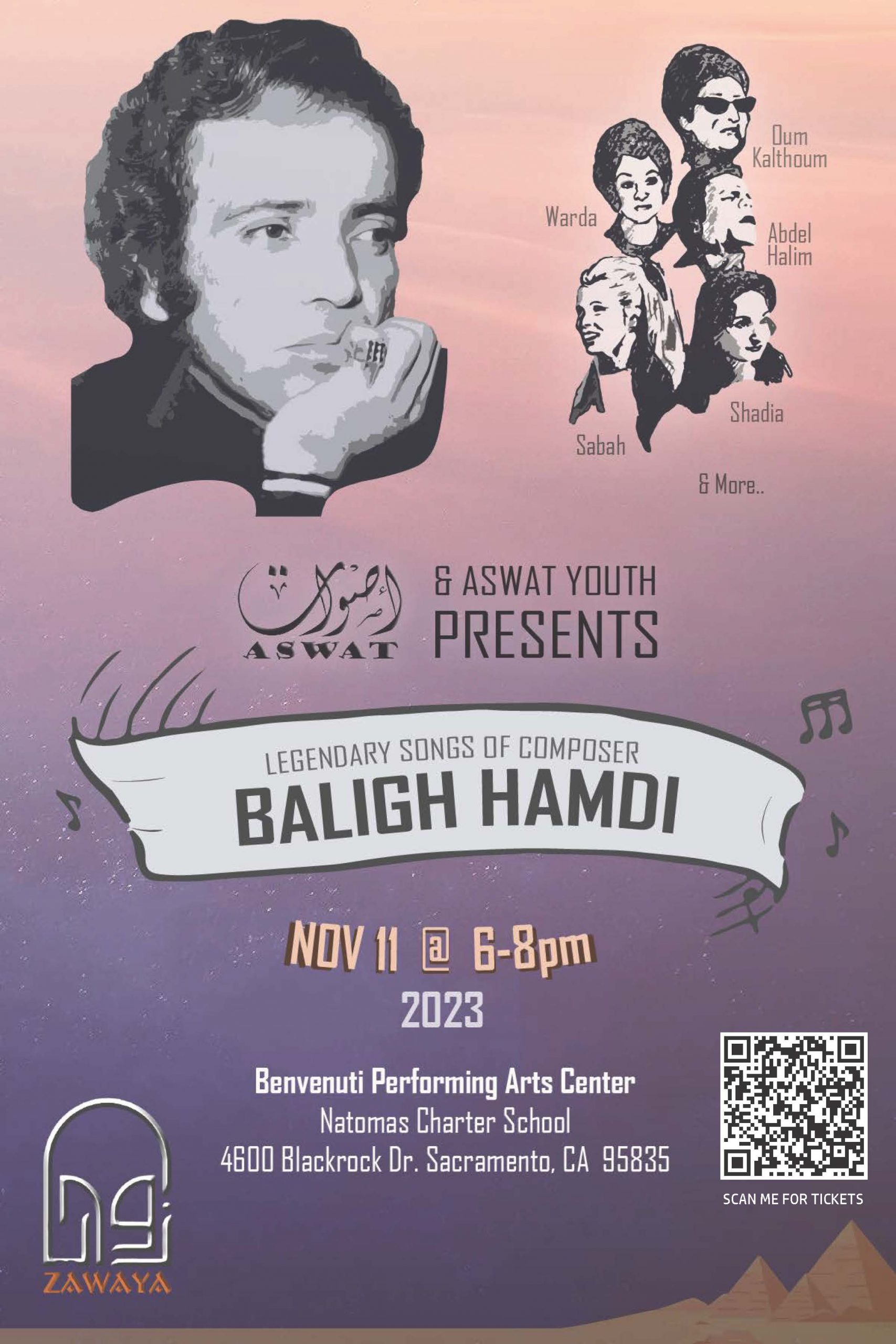
Aswat for me has been a poignant musical journey into my past and a bittersweet reminder of my rich heritage. Aswat has colored my life by introducing me to so many kind-hearted and talented individuals from all over the globe and by uniting me with some who share the same wounds from the past, inflicted by the loss of country and childhood. Indeed, Aswat has brought together different strands of my life that have been disjointed for a long time. And ironically, after two decades of studying western music, I am discovering the sounds of my roots which have silently accompanied me through the years.
Just a few days before boarding a plane in 1978 to leave war-torn Beirut for good, I still remember hearing Fairuz’s voice on the radio, which was often muffled by the sounds of shelling and gunfire. Her songs and those from other great artists in the Arab world are an echo from my childhood. And now through Aswat, that echo has come back to me as an adult. This is a powerful reminder that this music can outlive any war. It has an ancient soul that heals, unites and transcends religions, sects and nationalities. This music is a door into a dimension where time and space have no relevance. When we come together, just for a few hours, we open that door and, for me personally, my spirit is lifted up, up and far away from every obligation to work, family, community, money, gods and who knows what else. For just a few hours, there is only the sheer love and joy of music.
When the music plays, I feel as if we are united with the spirits of all those who have sung these songs before us, whether privately in their kitchens while cooking or on stage in front of thousands. These spirits are young and old, rich and poor, famous and unknown. They join us from every corner of the globe, many of whom have been scattered and estranged from their countries and their families. They fill every seat beyond our sight in that rehearsal hall. They sway to the lyrical melodies, the infectious rhythms and the rich timbres of instruments and voices. And at the end of the day, they return to their villages and cities, a little less restless and alienated.
While I consider all of us in Aswat to be fortunate for being part of the group, the most fortunate member among us is one who does not sing or play. The healing spirit of music itself chose Nabila as its prime instrument, to bring this group together and to keep it going through thick and thin. Such an honor by the Muse of Muses can only be bestowed upon a very unique individual.
Our musical journey continues. Happy travels…